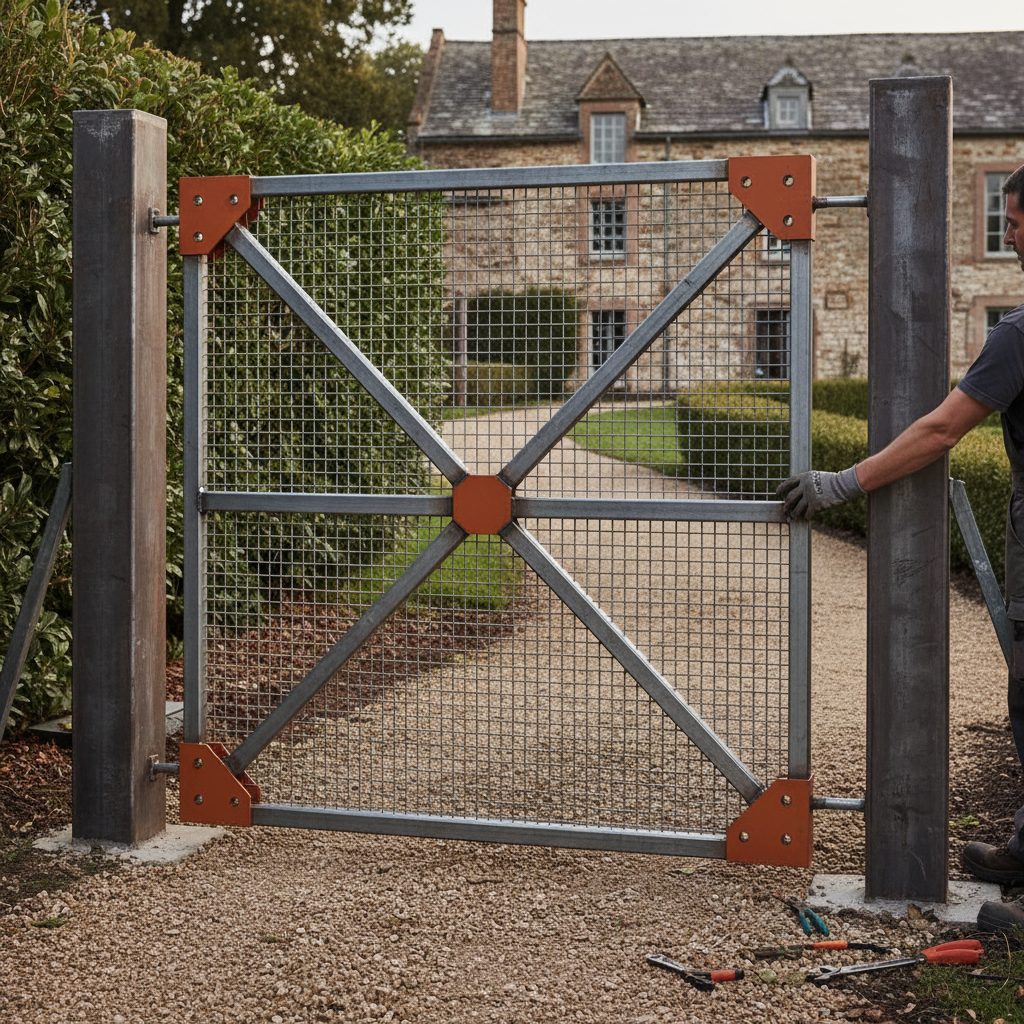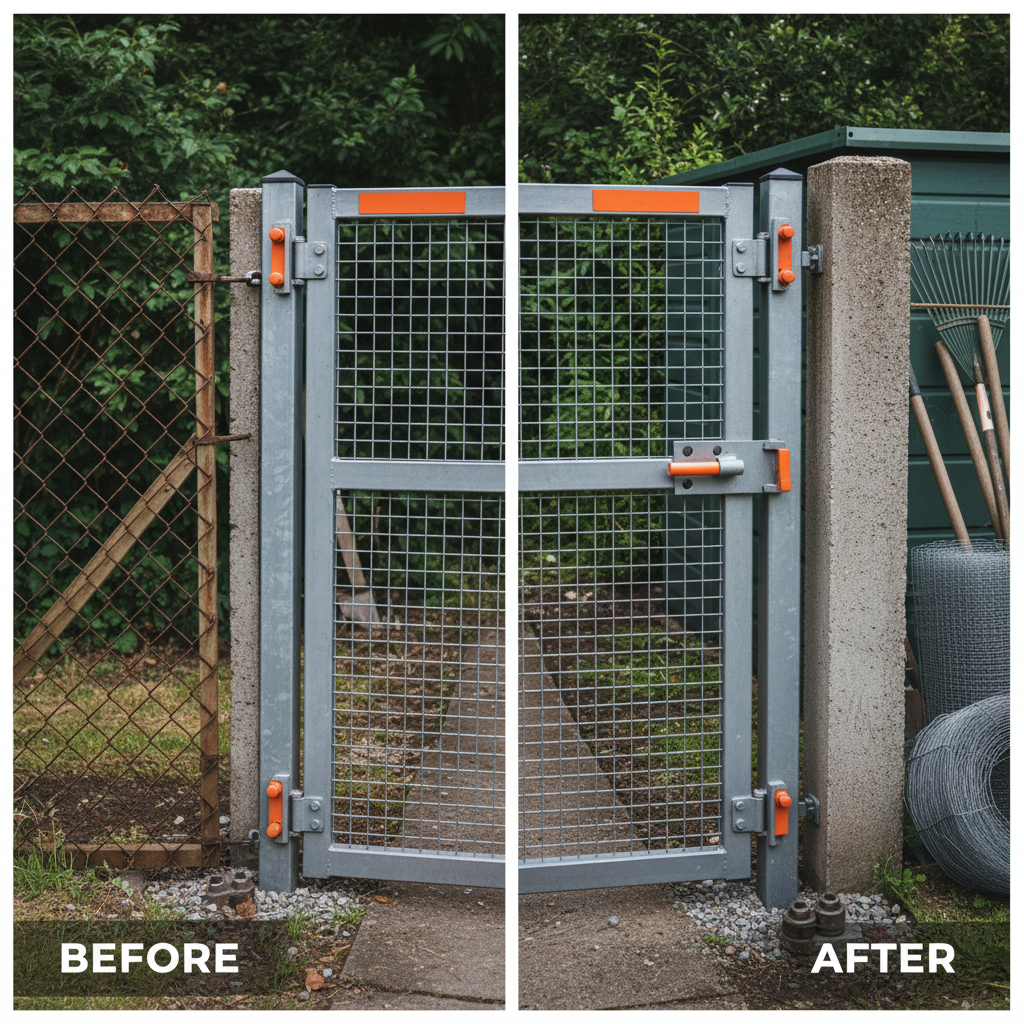
A custom garden gate serves as both a critical security boundary and a primary aesthetic statement for any residential or commercial landscape. In the metal fabrication industry, particularly within the sector of metal products manufacturing, the shift toward customized solutions allows property owners to balance structural rigidity with specific architectural requirements.
Many property owners struggle with prefabricated gates that either fail to fit non-standard openings or lack the durability required for harsh outdoor exposure. This often leads to premature sagging, corrosion, or security vulnerabilities that compromise the entire fencing system.
This guide provides a technical and practical analysis of custom garden gate specifications, material considerations, and selection frameworks to help buyers secure a durable, high-performance entry solution tailored to their specific environment.

Core Specifications for Custom Gate Frameworks

The structural integrity of a custom garden gate depends on the relationship between the frame profile and the infill density. For professional metal fabrication, using a 40x40x1.2mm frame profile ensures a balance between weight and rigidity, preventing the gate from warping over time. The nominal width typically ranges from 1000mm to 1200mm, while heights are scaled from 800mm up to 2000mm to match existing fence lines.
To ensure stability, the gate post dimensions must be proportional to the gate's mass. For example, a 60x60x1.5mm post is recommended for larger gates to prevent leaning. This structural approach is essential for maintaining the 180-degree opening capability of reversible hinges, ensuring that the gate operates smoothly throughout its lifespan regardless of the direction of swing.
Material Engineering and Weatherproofing
Longevity in outdoor metal products is determined by the post-treatment process. Electrostatic spraying is the industry standard for custom garden gates, providing a thick, uniform layer of protection that is both water-proof and UV-proof. This process prevents the underlying metal from oxidizing when exposed to rain, humidity, and direct sunlight.
Color selection is not merely aesthetic but can influence heat absorption. Standard options such as Black RAL9005, Gray RAL7016, Green RAL6005, and White RAL9010 are widely used. From a technical perspective, the combination of high-grade electrostatic coating and robust frame profiles ensures that the gate retains its structural properties in diverse climates, from humid coastal areas to arid inland regions.
Application Scenarios and Functional Matching
Matching the gate configuration to the specific application scenario is vital for operational efficiency. For private residential gardens, a single wing gate often suffices for pedestrian access, focusing on decorative appeal and ease of use. In contrast, farm fence gates require higher rigidity and wider openings to accommodate equipment or livestock, necessitating heavier duty posts and reinforced infills.
Government working areas and sports facilities typically prioritize high-traffic durability and security. In these settings, the focus shifts toward high-grade lock sets featuring aluminum handles and pure copper lock cylinders to prevent tampering. By aligning the product parameters—such as the 200x50mm infill profiles—with the intended use, users can ensure the gate meets both the security and aesthetic needs of the site.
Evaluating Performance Dimensions
When evaluating the performance of a custom garden gate, several conceptual dimensions must be analyzed. This includes structural rigidity, ease of installation, weather resistance, and security levels. The following chart provides a relative evaluation of these dimensions for high-grade custom metal gates compared to standard prefabricated options.
This illustrative framework shows that custom solutions significantly outperform standard options in fitment accuracy and weatherproofing due to specialized electrostatic treatments and adjustable 4-dimension mounting systems. While the initial complexity is slightly higher, the long-term stability and reduced maintenance requirements provide a higher overall value.
Hardware Integration and Security Standards
The performance of a custom garden gate is only as reliable as its weakest hardware component. High-quality hinge systems allow for 180-degree opening and are fully reversible, which is critical for adapting to changing landscape layouts. The integration of adjustable mounting hardware allows the gate to be fine-tuned in four dimensions, compensating for slight variances in post installation.
Security is further enhanced by the lock set assembly. The use of pure copper lock cylinders is a key technical detail, as copper provides superior corrosion resistance and smoother mechanical action compared to cheaper alloys. When paired with an aluminum panel and handle, the system becomes highly resistant to environmental degradation while maintaining a professional appearance.
Common Installation and Fitment Pitfalls
A common failure point in gate installation is the misalignment of the gate post, which leads to uneven pressure on the hinges and eventual sagging. To avoid this, it is essential to ensure that the post length is sufficient for the intended height—for example, using a 1300mm post for an 800mm height gate to ensure a deep, stable anchor in the ground.
Another frequent mistake is neglecting the UV and water proofing requirements of the finish. Using paints that are not electrostatically sprayed often results in peeling within two to three seasons. Ensuring that the gate is universal for both 2D and 3D panel fences allows for a more seamless integration with the existing border fence or mesh panel system, reducing the need for unsightly adapters.
Selection Framework for Gate Configurations
Choosing the right custom garden gate requires a systematic comparison of available configurations based on the specific needs of the property. Whether the priority is security, aesthetics, or heavy-duty utility, the following framework helps categorize the most effective approaches.
| Configuration | Primary Driver | Best Use Case | Key Consideration |
|---|---|---|---|
| Pedestrian Single | Accessibility | Private Garden | Hinge Reversibility |
| Heavy Duty Single | Rigidity | Farm / Industrial | Post Depth |
| Double Wing | Clearance | Driveways/Access | Center Latch Alignment |
| Decorative Custom | Aesthetics | Luxury Residential | Coating Color (RAL) |
| Security Focused | Protection | Government/Sports | Copper Lock Quality |
| Standard Modular | Cost/Speed | Border Fencing | Panel Compatibility |
By utilizing this relative evaluation, buyers can move beyond simple price comparisons and focus on the total cost of ownership, considering factors like durability, installation speed, and the long-term structural integrity of the metal fabrication.
Frequently Asked Questions
Electrostatic spraying provides a highly durable, uniform coating that is both water-proof and UV-proof. Unlike standard painting, it creates a stronger bond with the metal, preventing rust and fading in harsh outdoor environments.
Post size should be based on the gate's weight and height. For most custom garden gates, a 60x60x1.5mm post provides the necessary rigidity to prevent sagging, with the length extended (e.g., 1300mm to 2500mm) to ensure sufficient ground anchorage.
Yes, the system is designed to be universal for both 2D and 3D panel fences, making it easy to integrate with various mesh roll or panel fence configurations without requiring extensive modification.
Pure copper is significantly more resistant to corrosion and wear than aluminum. In an outdoor garden environment, a copper cylinder ensures the lock remains functional and smooth over many years of exposure.
While Black RAL9005, Gray RAL7016, Green RAL6005, and White RAL9010 are regular colors, the electrostatic spraying process allows for full customization of colors to match specific architectural themes.
A 4-dimension adjustable system allows the installer to correct minor misalignments in the posts or ground level, ensuring the gate closes perfectly and the latch aligns without needing to reinstall the posts.
Conclusion
Investing in a custom garden gate is a strategic decision that combines security, structural engineering, and aesthetic value. By prioritizing high-grade electrostatic coatings, proportional post sizing, and professional-grade hardware like copper lock cylinders, property owners can ensure a durable entry point that withstands environmental stress and operational wear.
For those evaluating specific dimensions or custom color requirements for their project, detailed product information and manufacturing capabilities can be reviewed at www.peilingtech.com to ensure the final solution matches the intended application.