-

-
 Whatsapp:+86 17732187393
-


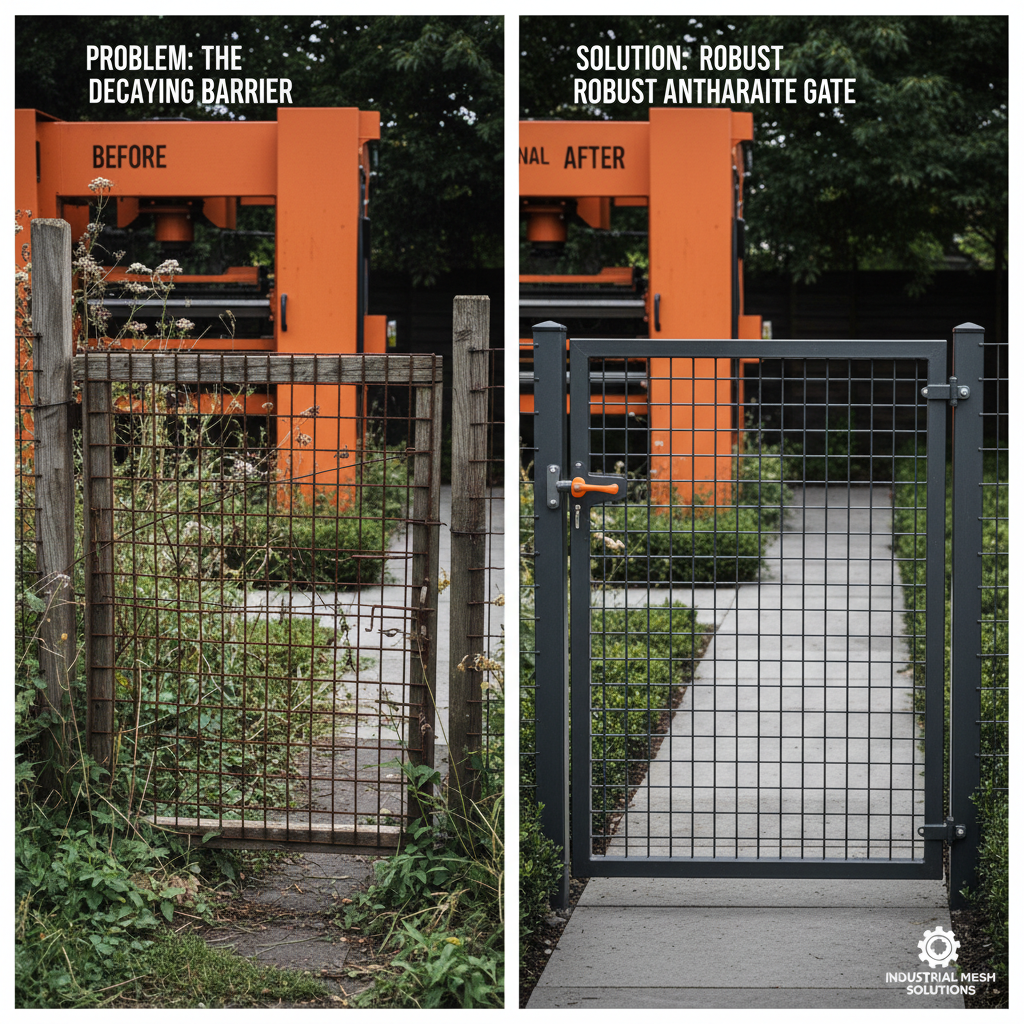
Selecting a garden entrance is rarely about simple access; it is about defining the boundary between a managed landscape and the outside world. When standard off-the-shelf dimensions fail to align with the unique topography of a property, the shift toward a garden gate custom approach becomes a functional necessity.
Modern landscape architecture now emphasizes the integration of security and aesthetics, moving away from generic barriers toward bespoke metal fabrications. The challenge for homeowners and developers lies in balancing material durability—specifically corrosion resistance—with the precise geometric requirements of the installation site.
This analysis explores the technical considerations of custom gate fabrication, from material selection and protective coatings to the structural logic that ensures long-term stability in outdoor environments.


The reliance on standardized garden gates has historically led to compromises in both security and visual harmony. Customization allows for the exact matching of gate widths and heights to existing fence posts, eliminating the gaps that often compromise the integrity of a garden perimeter.
This transition is driven by a growing demand for "one-stop" customization services. For enterprises like Hebei Peiling Tech Co., Ltd., the focus has shifted toward providing a comprehensive ecosystem where the gate, post, and fitting are engineered as a single cohesive unit, ensuring that the load-bearing capacity of the post matches the weight of the custom gate leaf.
A custom gate's longevity depends on the relationship between its structural frame and the infill material. Whether utilizing a single wing or double wing configuration, the primary engineering concern is preventing "sagging" over time. This is achieved through precise welding of diagonal braces and the selection of gauge-specific galvanized iron wire that provides sufficient rigidity without adding excessive dead weight to the hinges.
The integration of components such as fence fittings and specialized post caps is not merely aesthetic; these elements protect the internal core of the metal from water ingress, which is the primary catalyst for oxidation. A well-engineered custom gate considers the thermal expansion of metal, leaving calibrated clearances that prevent the gate from binding during extreme temperature shifts.
Furthermore, the choice between electrostatic spraying and PVC coating affects the overall structural flexibility. While spraying provides a hard, sleek finish, PVC coating offers a resilient layer that can absorb minor impacts without cracking, making it ideal for gates in high-traffic residential areas or farms.
The core of any durable garden gate is the quality of its base metal. Galvanized iron serves as the industry standard due to its inherent resistance to rust. However, in coastal or humid environments, simple galvanization is often insufficient. This is where deep processing techniques, such as PVC coating, become critical.
PVC coated wire is engineered through a process that tightly bonds plastic to galvanized iron, creating a synergistic barrier that is anti-aging, corrosion-resistant, and anti-cracking, significantly extending the service life compared to standard hot-dipped galvanizing.
This protective layer does more than stop rust; it provides insulating properties and fire retardancy. For custom gates, this means the ability to offer a variety of RAL colors—such as Black RAL9005 or Green RAL6005—without compromising the metal's structural integrity. The adhesion strength of the PVC ensures that the coating does not peel under intense UV exposure.
When evaluating different finishing options for a custom gate, stakeholders must consider the trade-off between initial cost and lifecycle maintenance. Electrostatic spraying offers a professional, smooth appearance suitable for architectural gardens, whereas PVC coating is prioritized for utility-heavy environments where flexibility and impact resistance are paramount.
The following relative assessment index illustrates how different treatment methods perform across key durability dimensions, such as weather resistance and lifespan extension.
In a typical residential setting, a custom garden gate often serves as a privacy solution or a decorative focal point. Here, the priority is the seamless blend of the gate with elements like flower trellises or rose arches. The use of customized RAL colors allows the metal hardware to disappear into the foliage or contrast sharply with the architecture, depending on the design intent.
Conversely, in agricultural or industrial applications—such as creating access points for chicken coops or horse living areas—the focus shifts to strength and animal safety. In these scenarios, the flexibility of PVC coated wire is invaluable, as it prevents sharp metal edges from causing injury and withstands the corrosive nature of organic waste and moisture.
The trajectory of the garden hardware industry is moving toward hyper-customization supported by advanced metal fabrication. We are seeing a rise in the integration of laser-cutting screens within gate panels, allowing users to incorporate complex artistic patterns while maintaining the structural security of a heavy-duty frame.
Another significant trend is the demand for modularity. Future gate systems are being designed for easier disassembly and reconfiguration, allowing homeowners to expand their garden boundaries without needing to replace the entire entry system. This requires a higher precision in the manufacture of fence fittings and pole anchors to ensure a perfect fit across different modules.
Sustainability is also influencing material choices. There is an increasing focus on the recyclability of PVC coatings and the reduction of chemical waste during the electrostatic spraying process. The goal is to produce hardware that lasts for decades, reducing the environmental impact of frequent replacements.
Choosing the right custom gate requires an objective analysis of the environmental stressors and the intended use of the space. A common mistake is prioritizing aesthetics over material suitability—for example, choosing a thin-gauge galvanized wire for a high-wind area, which can lead to structural warping.
A robust selection process should begin with a site audit: evaluating the soil type for post stability, measuring the exact opening to the millimeter, and identifying the proximity to corrosive agents like salt spray or chemical fertilizers.
The following table provides a comparative framework to help buyers align their specific requirements with the appropriate material and coating specifications.
| Scenario | Recommended Coating | Wire Gauge Priority | Primary Selection Factor |
|---|---|---|---|
| Coastal Garden | PVC Coated | Heavy (3.0mm+) | Salt Corrosion Resistance |
| Urban Minimalist | Electrostatic Spray | Medium (2.0-2.5mm) | Aesthetic Finish (RAL) |
| Farm/Livestock | PVC Coated | Heavy (2.7mm+) | Impact & Flexibility |
| Decorative Entry | Powder Coated | Light-Medium | Visual Integration |
| High-Security Perim. | Hot-Dip Galv. | Extra Heavy (3.0mm+) | Structural Rigidity |
| Small Vegetable Plot | Electric Galv. | Light (1.5-2.0mm) | Cost-Effectiveness |
Standard galvanization provides a zinc layer that protects the iron core, but it can eventually wear thin or scratch, leading to localized rust. PVC coating adds a thick, resilient plastic layer over the galvanized base. This "double-layer" protection prevents moisture and oxygen from reaching the metal entirely, typically extending the service life several times over compared to simple hot-dipped or electric galvanizing, especially in harsh weather conditions.
The most critical measurements are the "clear opening" width (the distance between the inner faces of the posts) and the height from the lowest ground point to the top of the fence line. Additionally, the diameter of the existing fence posts must be measured to ensure that the hinges and latches fit securely. It is also important to note any slope in the terrain, as the bottom of the gate may need a custom arch or taper to allow for smooth operation.
Yes. Using electrostatic spraying or PVC coating allows for a wide range of colors (such as RAL9005 Black or RAL6005 Green) without compromising the metal's protection. Because the color is integrated into the protective layer itself rather than painted on top of a finished product, it maintains its adhesion and UV resistance, preventing the peeling and fading commonly associated with standard outdoor paints.
The choice depends on the entry width and usage. Single wing gates are generally more stable and easier to install for narrow openings. However, double wing gates are superior for wider entrances, as they distribute the weight across two posts and reduce the "swing radius" required, making them more practical for gardens with limited space or for allowing larger equipment to pass through. For dog enclosures, double wings often provide more flexible access points.
Sagging is prevented through three main factors: the use of diagonal bracing (which transfers the load from the outer edge back to the hinge post), selecting the correct wire gauge to ensure the frame is rigid, and installing high-quality, heavy-duty hinges. Ensuring the gate posts are deeply anchored with a pole anchor or concrete footer is also essential, as any movement in the post will immediately cause the gate to misalign.
PVC coating is often more sustainable in a lifecycle context because it drastically reduces the need for frequent repainting and chemical treatments over the decades. While the material itself is a polymer, the reduction in waste from replaced rusted gates and the elimination of volatile organic compounds (VOCs) found in many traditional paints make it a more durable and lower-maintenance alternative for outdoor infrastructure.
The transition from generic hardware to a garden gate custom strategy is an investment in both property value and operational longevity. By prioritizing the science of protective coatings and the logic of structural engineering, homeowners can ensure that their boundaries are not only visually appealing but functionally enduring.
Ultimately, the success of a custom gate lies in the precision of its fabrication. When materials like PVC coated wire are combined with a rigorous quality inspection process, the result is a boundary solution that resists the elements while perfectly fitting the unique dimensions of the modern garden.